Sustainability without compromise.
Scalability by design.

Our partners


Auto-injector demand is moving from around one billion devices a year toward more than two billion by 2030, driven by growth in GLP-1s, biologics, and the general shift to patient self-injection.
Conventional auto-injectors use eight to fourteen plastic parts, and those parts have to hold the device's spring under load for its full shelf life, which calls for expensive, fossil-based engineering grade plastics or even more expensive renewable versions of the same polymers. Cost and carbon are built into the design.
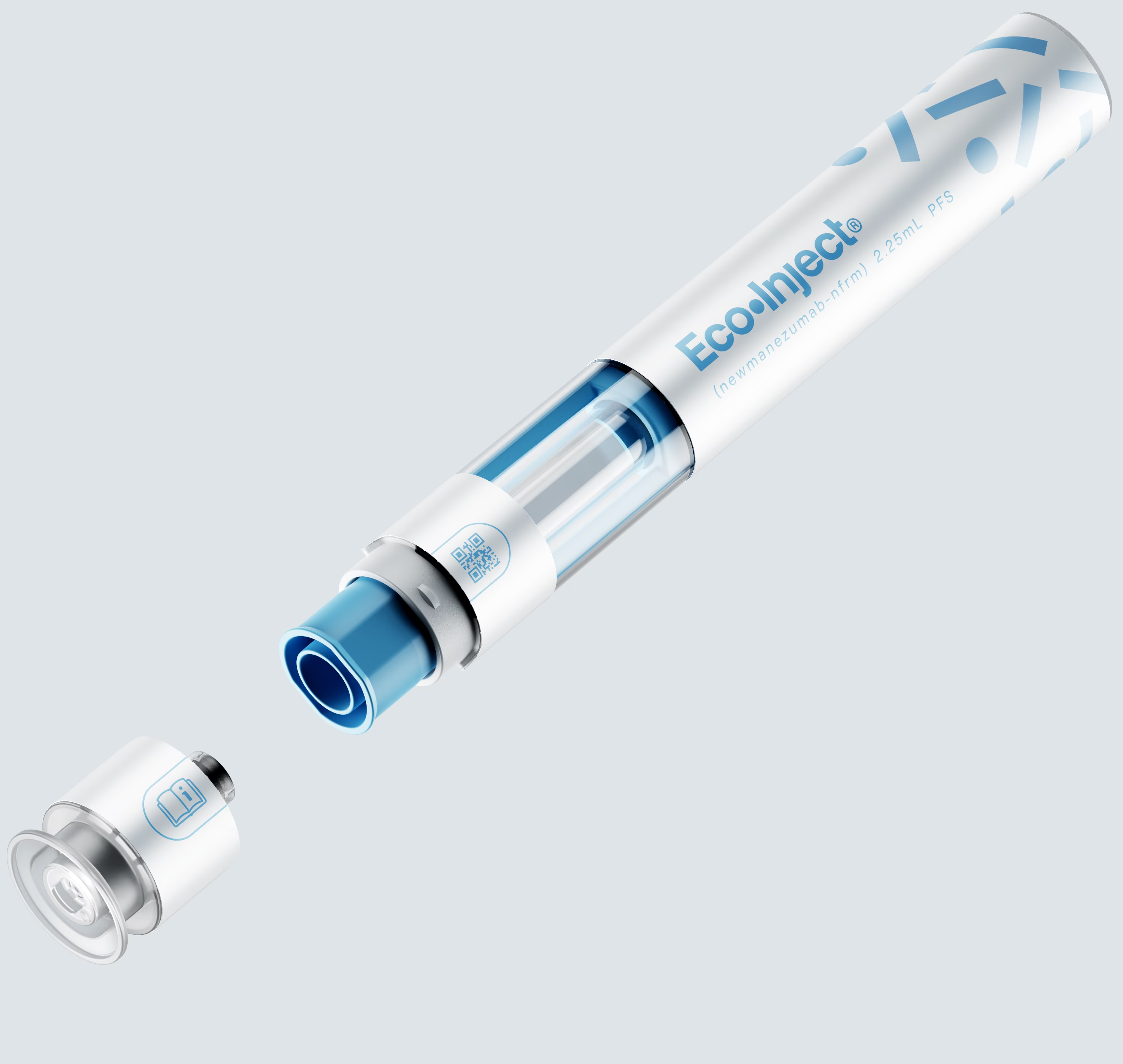
Eco-Inject takes the load off the plastic using stamped metal parts to bear the force of the spring, so the structural plastic parts no longer have to. This allows Eco-Inject to use more cost-effective bio-based plastics that are 100% biogenic. The overall design is simplified to five moulded components instead of eight to fourteen, with each part designed for ease of manufacturing and simple assembly in one high speed automated assembly process.

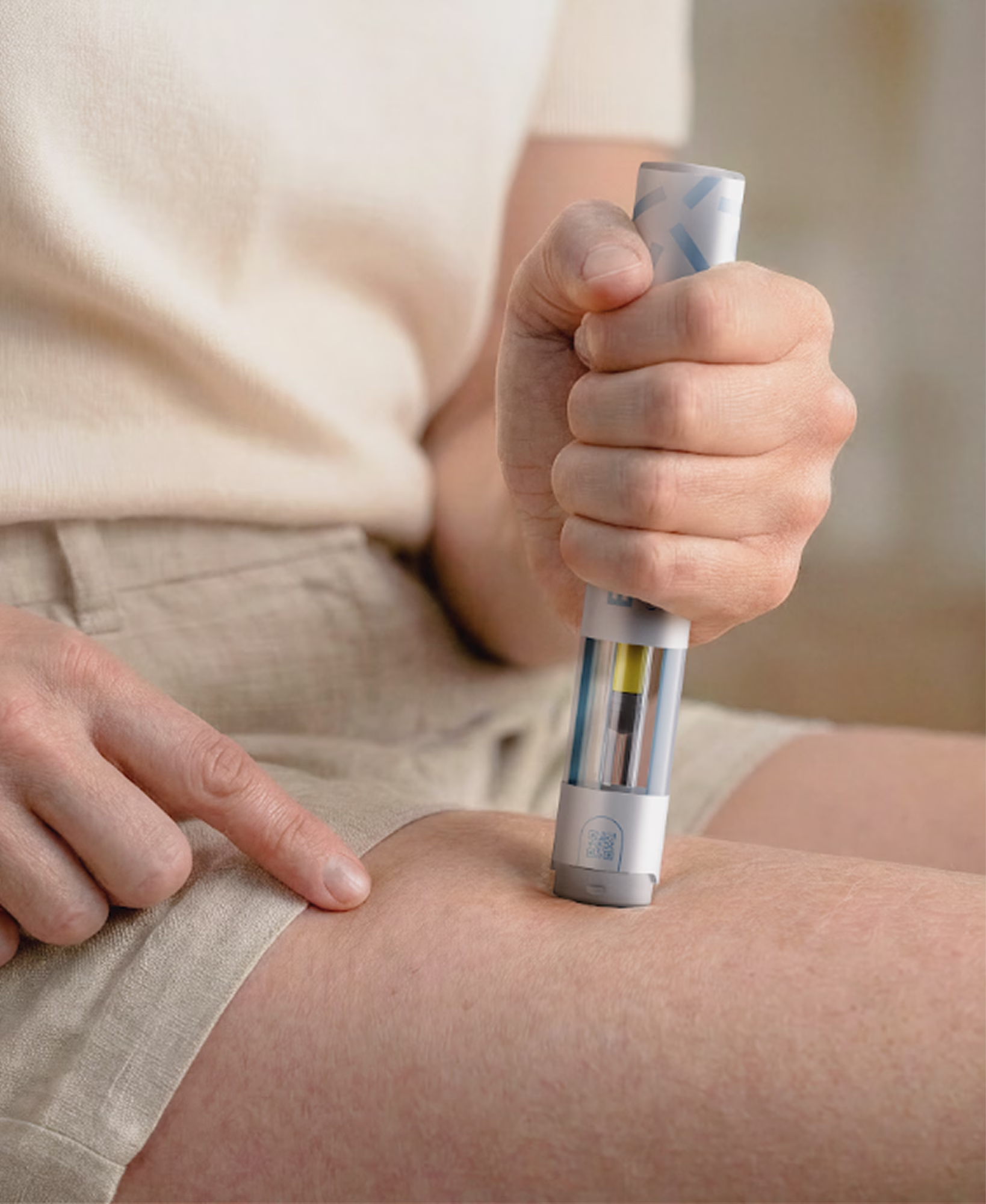


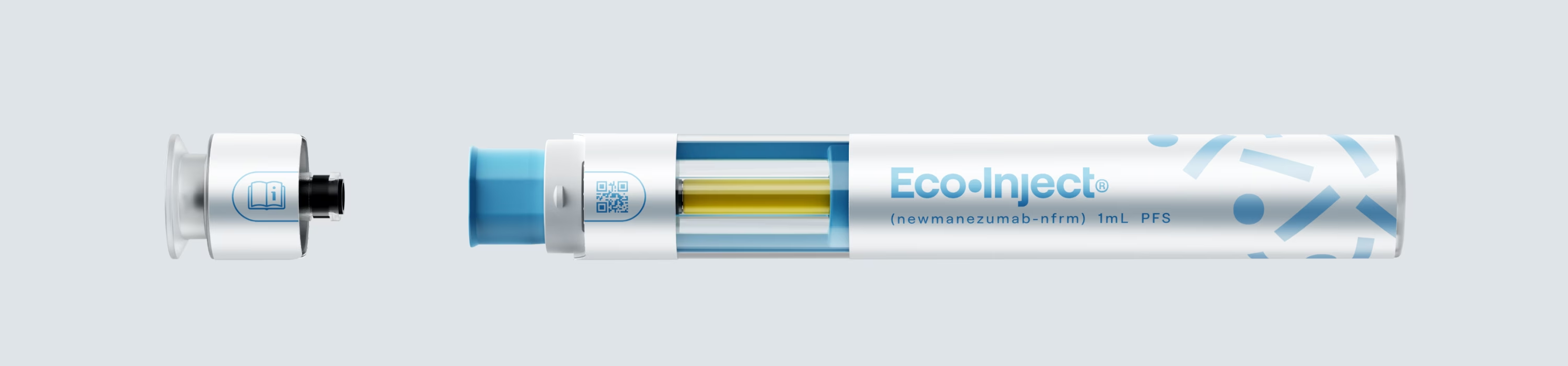
Device type: Two-step, single-use auto-injector.
Manufacturing: Designed for very high speed automated assembly, pilot line targeting 60 devices per minute.
Viscosity and fill: Compatible across a broad range of viscosities (1-50cP) and fill volumes (0.2 - 2mL).
Pre-filled syringe formats: 1ml and 2.25ml, ISO 11040-4 standard. One part changes between the two.
Branding: Customisable to your brand colours and graphics.
Materials: Five moulded components, 100% bio-based, bio-derived and biogenic polymers.
Evaluation: Pilot production devices available for handling assessment and evaluation on request.
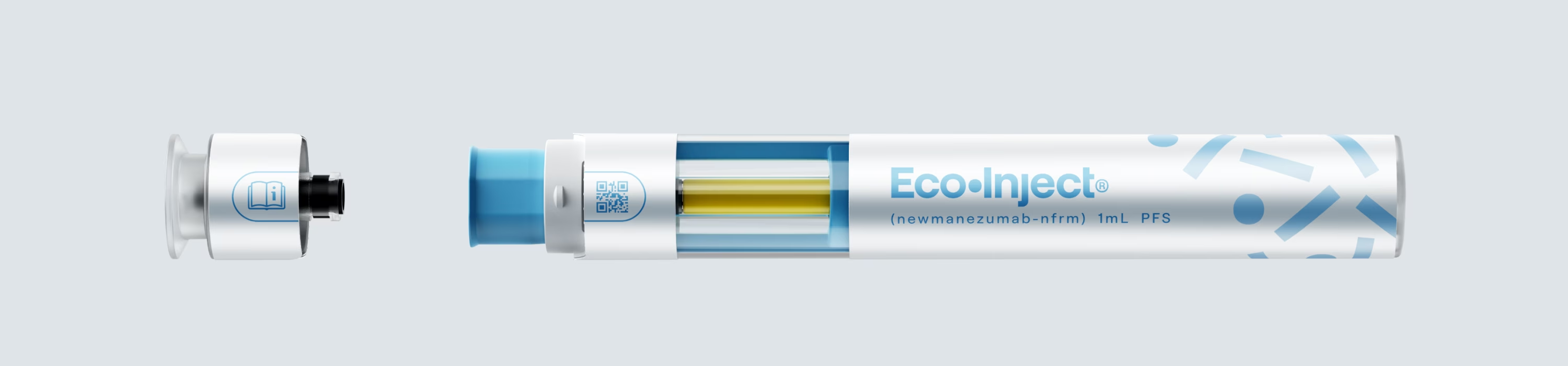
Device type: Two-step, single-use auto-injector.
Manufacturing: Designed for automated assembly at up to 60 devices per minute on a single line.
Viscosity and fill: Compatible across a broad range of viscosities and fill volumes.
Pre-filled syringe formats: 1ml and 2.25ml, ISO 11040-4 standard. One part changes between the two.
Branding: Customisable to your brand colours and graphics.
Materials: Five moulded components, 100% plant-derived polymers.
Evaluation: Pilot production devices available for handling assessment and evaluation on request.

The structural load of the spring is carried by stamped metal parts, not by the plastic. This makes cost-effective bio-based polymers viable without the mechanical failure risk that would normally rule them out. The device performs the same way a conventional two-step auto-injector does across its shelf life.
Eco-Inject autoinjector is built of five moulded components, made entirely from bio-based, bio-derived and biogenic polymers. The components that carry the spring load are produced from stainless steel with a 93% lower carbon footprint than conventional stainless steel. Up to 100% of the stainless steel may have come from recycled sources.
100% of the polymers in our device have been produced using renewable materials where the carbon has been sequestered from the atmosphere. All of the polymer ‘building blocks’ are derived from conversion of biomass.
We have commissioned an independent product LCA comparing our device with leading competitors on a true like for like basis. This LCA analysis has been reviewed by a second LCA expert. As we move into commercial production we have committed to reviewing our product LCA on a regular basis using data from our production partners.
No, being ‘bio’ does not automatically mean that the polymers are biodegradable. For example, bio-PE is bio-based, bio-derived and biogenic, BUT chemically it is the same as fossil derived PE and does not bio-degrade. Conversely, some fossil-based polymers are biodegradable: PBAT (Polybutylene Adipate Terephthalate) is a highly flexible, fully biodegradable and compostable synthetic polymer. Eco-Inject’s device contains a mixture of both non-bio-degradable polymers as well as polymers that would bio-degrade in the correct conditions.
A 100% biogenic, bio-based polymer, only contains physical carbon that has been sequestered from the atmosphere by plants (i.e. biogenic). A polymer certified as "mass-balanced bio-based" or “mass balanced bio-attributed” physically contains a mixture of both fossil and biogenic carbon, in some cases, a specific batch might physically contain zero biogenic carbon at all. Eco-Inject only uses bio-based polymers that contain 100% biogenic carbon.
Scientists use radiocarbon (Carbon-14) testing (like ASTM D6866) to verify if a plastic is truly biogenic. Living biomass contains measurable C14 and this will end up in the bio-based polymer. Ancient fossil fuels have no C14.
If you take a plastic part certified as "100% bio-attributed via mass balance" and test it in a lab, the C14 test will not show 100% biogenic carbon. It will only show the minor percentage of biogenic carbon that happened to end up in that specific blend. Because you cannot prove mass balance by testing the final product, companies must rely on rigorous third-party bookkeeping audits (such as ISCC PLUS certification) to prove that for every "bio-plastic" item sold, an equivalent amount of biogenic feedstock was pumped into the front end of the factory.
A test on the plastic parts in an Eco-Inject device would show 100% biogenic carbon.
No. Eco-Inject’s product carbon footprint saving of >80% versus conventional devices does not require a change in patient behaviour or the creation of a dedicated product recycling process. The carbon savings are designed into the product.
Most geographies treat a used autoinjector as clinical waste which must be incinerated. However, if local regulations allow, and a recycling scheme was set up, the device has been designed for simple and rapid disassembly into individual components for recycling and/or safe disposal. Potentially such a scheme could further lower the product carbon footprint.
Incineration of the autoinjector as a medical waste is expected to be the predominant end of life treatment for the device. When the device is incinerated, the biogenic carbon in the polymers that was previously sequestered from the atmosphere is released back into the atmosphere. This carbon cycle is comparable to the carbon energy cycle where, for example, wood is grown (sequestering carbon), then burnt for energy (releasing the carbon back into the atmosphere).
Unit manufacturing cost is at or below that of a conventional auto-injector at pharma-scale volumes, with margin. The cost advantage is structural, coming from fewer parts and a single automated assembly step, so it holds at volume.
Yes. Generic and biosimilar programmes are one of the main customer groups for Eco-Inject. Our device is well suited to biosimilar economics and has a sustainability profile that should be compelling in procurement tenders.
Yes. Pilot production devices are available for handling assessment and evaluation on request, ahead of any commercial commitment.
Wondering whether Eco-Inject fits your pipeline? Let's talk.
Pilot production devices are available for handling assessment and evaluation on request.

© 2026 Eco Inject (Pty) ltd. All Rights Reserved.
Site designed and developed by Adopter